Researchers from the Jawaharlal Nehru Centre for Advanced Scientific Research (JNCASR) , in collaboration with the Indian Institute of Science (IISc), Bengaluru , and the University of Sydney, Australia , have demonstrated an unusually strong thermoelectric effect in a solid crystalline semiconductor. The findings were published in the scientific journal Science and announced by the Ministry of Science and Technology on 31 August 2026. The Seebeck Effect The research is based on the Seebeck effect , in which a temperature difference across a material produces an electrical voltage. This principle is already used in: Temperature sensors Thermoelectric generators Waste-heat energy conversion Thermal detection systems Conventionally, crystalline solids have been considered to have a relatively limited Seebeck response. Scandium Nitride Breakthrough The researchers prepared thin films of scandium nitride (ScN) on magnesium oxide substrates. The ScN was deliberately doped with magnesium , producing what researchers describe as a heavily doped, highly compensated semiconductor . Despite this modification, the material retained its single-crystalline structure. Extraordinary Thermoelectric Response The experimental material produced a Seebeck coefficient exceeding −124.6 millivolts per Kelvin near room temperature in a film approximately 200 nanometres thick. According to the researchers, this was several hundred to more than 1,000 times larger than values commonly observed in inorganic semiconductors and roughly 100 times beyond the previously recognised ceiling. The result is particularly important because such large thermoelectric responses were generally associated with liquid electrolytes and ionic materials rather than crystalline solids. Prototype Photon Sensor The researchers also constructed a preliminary photon sensor using the ScN thin film and chromium contacts. When one contact was illuminated with a laser, the resulting small temperature difference generated a strong electrical response. The prototype demonstrated a Seebeck response of about −102.4 millivolts per Kelvin . Researchers believe that further optimisation could eventually support extremely sensitive light detection, potentially extending towards single-photon detection near room temperature . Future Applications The discovery could contribute to the development of: Ultrasensitive temperature sensors High-resolution heat-flux detectors Low-noise thermal imaging Bolometric devices Internet of Things sensors Advanced photon detectors Quantum sensing technologies An Indian patent application has also been filed covering thermoelectric thin-film materials and sensors developed from the research.
Loading article
Getting the latest update ready to read.
Indian Scientists Break Long-Standing Thermoelectric Limit for Ultrasensitive Temperature Sensing
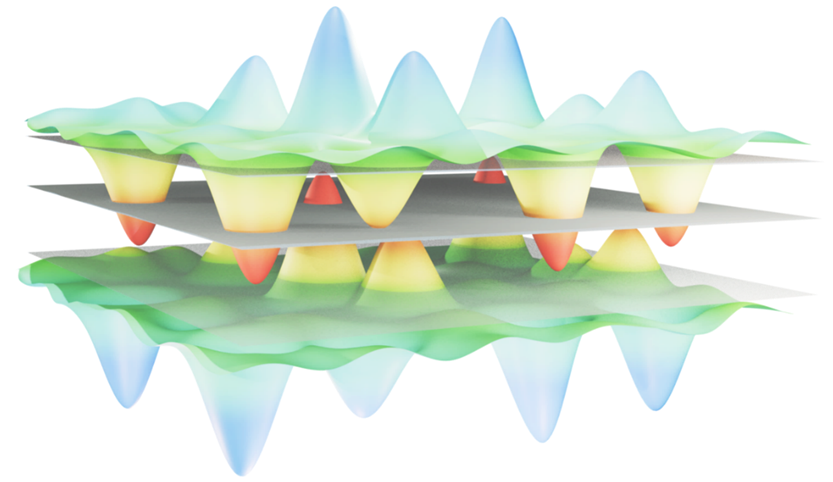
Researchers led by India’s JNCASR developed a crystalline semiconductor showing an extraordinarily large thermoelectric response, exceeding the conventional limit associated with solid materials. The discovery could enable highly sensitive temperature sensors, thermal imaging and future quantum-sensing devices.
Key Highlights
- <strong>Lead institution:</strong> JNCASR
- <strong>Indian collaborator:</strong> IISc Bengaluru
- <strong>International collaborator:</strong> University of Sydney
- <strong>Material:</strong> Scandium nitride (ScN)
- <strong>Key phenomenon:</strong> Seebeck effect
- <strong>Measured response:</strong> More than −124.6 mV/K near room temperature
- <strong>Potential uses:</strong> Temperature sensing, thermal imaging, photon detection and quantum technologies
- <strong>Patent:</strong> Indian patent application filed
Source: ExamTier Current Affairs
Share your feedback
Have a suggestion about this article? Send it privately to our editorial team.
 Current Affairs
Loading related article
Loading date
Current Affairs
Loading related article
Loading date
Current Affairs
Loading related article
Loading date
Current Affairs