The Centre for Development of Telematics (C-DOT) , the telecom research and development organisation under the Department of Telecommunications, unveiled a portfolio of 14 indigenous quantum-security products . The announcement highlights India's efforts to develop domestic technologies capable of protecting telecom, enterprise and strategic communication networks in the emerging quantum-computing era. Two Major Technologies The new product portfolio primarily focuses on two areas: Quantum Key Distribution (QKD) Uses principles of quantum technology for secure generation and distribution of encryption keys. Helps detect attempts to intercept protected communication. Post-Quantum Cryptography (PQC) Uses cryptographic algorithms designed to remain secure against attacks involving powerful quantum computers. Can be incorporated into existing digital and communication infrastructure. Major Products Among the 14 products unveiled are: Q-AKSHAY CD & Q-AKSHAY MD Quantum Key Distribution systems designed for secure key generation and transmission over fibre networks. Q-SETU A quantum-safe Layer 3 encryptor capable of throughput of up to 80 Mbps . Q-MAHASETU A high-speed commercial-grade quantum-safe encryptor supporting throughput of up to 40 Gbps . Q-VIKRAM & Q-PARAKRAM Defence-grade quantum-safe encryptors capable of securing sensitive and strategic communications. Q-AMOGH A high-speed optical encryptor capable of throughput of up to 200 Gbps . Q-DARSHAN A quantum-safe video IP phone designed to secure voice and video communications. Q-VACHAN An in-line solution that can add quantum-security capabilities to existing IP phones. Q-VAAYU A quantum-safe solution designed for wireless point-to-point communication. Q-VAJRA1000 An access node intended to introduce quantum-safe protection into existing communication infrastructure. Protection Against Future Quantum Threats Modern communication networks depend heavily on cryptography to protect sensitive information. Powerful quantum computers could eventually pose challenges to some of today's conventional encryption methods. Developing quantum-safe technologies in advance can therefore help protect critical communication systems from future cyber threats. C-DOT's portfolio combines both QKD and PQC approaches , allowing quantum-security technologies to be applied across different types of networks. Applications The technologies can support secure communication across several areas: Telecom networks Enterprise networks Optical communication Wireless networks Government infrastructure Strategic communication Defence communication The initiative is particularly significant for systems where confidentiality and long-term protection of sensitive information are essential. Indigenous Technology Development The development of these products strengthens India's domestic capabilities in advanced communication security. It also supports the country's broader objective of developing secure, resilient and future-ready digital infrastructure without depending entirely on foreign quantum-security technologies.
Loading article
Getting the latest update ready to read.
C-DOT Unveils 14 Indigenous Quantum Products for Secure Communication Networks
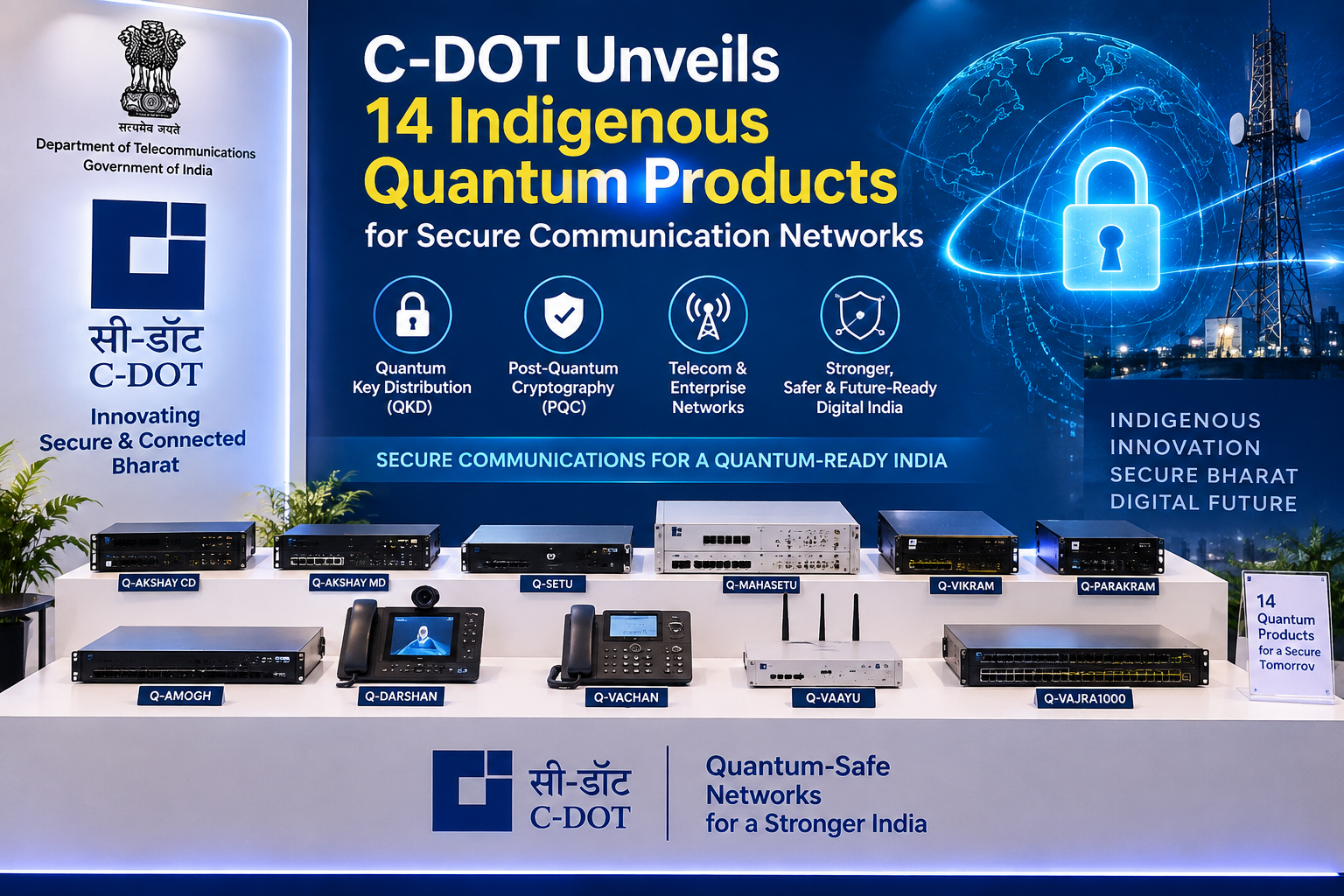
The Centre for Development of Telematics (C-DOT) unveiled 14 indigenously developed quantum products covering Quantum Key Distribution and Post-Quantum Cryptography. The technologies are designed to protect India's communication networks against emerging cybersecurity risks from future quantum computers.
Key Highlights
- <strong>Organisation:</strong> Centre for Development of Telematics (C-DOT)
- <strong>Number of products:</strong> 14
- <strong>Location:</strong> New Delhi
- <strong>Major technologies:</strong> QKD and Post-Quantum Cryptography
- <strong>Q-MAHASETU:</strong> Up to 40 Gbps
- <strong>Q-AMOGH:</strong> Up to 200 Gbps
- <strong>Q-VIKRAM & Q-PARAKRAM:</strong> Defence-grade quantum-safe encryptors
- <strong>Q-DARSHAN:</strong> Quantum-safe video IP phone
- <strong>Main objective:</strong> Protect communication networks from future quantum-era cybersecurity threats
- <strong>Applications:</strong> Telecom, enterprise, wireless, optical, strategic and defence networks
Source: ExamTier Current Affairs
Share your feedback
Have a suggestion about this article? Send it privately to our editorial team.
 Current Affairs
Loading related article
Loading date
Current Affairs
Loading related article
Loading date
Current Affairs
Loading related article
Loading date
Current Affairs