FSSAI's New Proposal Under the proposed system, packaged foods exceeding specified nutritional thresholds would carry prominent warnings on the front of the package, rather than relying only on the detailed nutrition information elsewhere on the label. The red hexagonal labels could display warnings such as “HIGH FAT,” “HIGH SUGAR,” “HIGH SALT,” or “HIGHLY SWEETENED BEVERAGE.” The aim is to make potentially unhealthy nutritional characteristics immediately understandable to consumers. reuters.com Front-of-Pack Warning Labelling Front-of-Pack Warning Labelling, or FOPWL, is a system that places easily understandable nutritional warnings on the main display panel of packaged food. Instead of requiring consumers to calculate quantities from a nutrition table, the warning gives them a quick indication that a product contains excessive amounts of specified nutrients. For example, a packet of processed snacks could carry a HIGH SALT or HIGH FAT warning, while a sugary beverage could carry a HIGHLY SWEETENED BEVERAGE warning. Nutrients Covered The proposal focuses primarily on three nutrients of concern: Sugar • Salt • Saturated Fat Highly sweetened beverages would have a separate warning category. The thresholds are proposed to draw on the Dietary Guidelines for Indians, 2024, issued by the Indian Council of Medical Research–National Institute of Nutrition (ICMR-NIN). Two-Phase Implementation FSSAI has proposed introducing the warning system gradually. Phase I: A packaged food would generally receive a warning when it exceeds the prescribed limits for two or more nutrients of concern. Highly sweetened beverages would be separately covered. Phase II: The system would become stricter. A product exceeding the threshold for even one nutrient of concern could require a warning. The phased approach is intended to provide manufacturers time to reformulate products and adapt their packaging. Exempted Products The proposal provides exemptions for certain single-ingredient or naturally nutrient-rich products. These include products such as milk, ghee, edible oils, salt, sugar, jaggery and honey, subject to the detailed conditions of the eventual regulations. Supreme Court Background The development follows scrutiny from the Supreme Court of India over delays in introducing effective front-of-pack warnings. On 13 August 2026, the Supreme Court criticised FSSAI for not yet introducing warning labels indicating high levels of sugar, salt and saturated fat. The Court emphasised public health, particularly the health of children, and gave the government an opportunity to place its final position before the Court. FSSAI subsequently informed the Supreme Court through a compliance affidavit that it was proposing the red hexagonal warning-label system. Earlier Labelling Approach India has been considering stronger front-of-pack nutrition labelling for several years. In 2024, FSSAI approved a proposal to display information relating to total sugar, salt and saturated fat in bold letters and a larger font on packaged-food labels. That proposal was aimed at helping consumers better understand nutritional information and supporting efforts to tackle non-communicable diseases. The latest red-warning proposal goes further by providing a more direct visual warning when specified nutritional thresholds are exceeded. Public Health Significance The policy is intended to address growing concerns about unhealthy diets, obesity and diet-related non-communicable diseases. Clear warnings could be especially useful for consumers who may find conventional nutritional tables difficult to interpret. A prominent HIGH SUGAR or HIGH SALT warning communicates the key information much more quickly. Children are also an important consideration because packaged snacks and sweetened beverages are widely consumed by younger age groups. The Supreme Court specifically highlighted concerns about children's health during its consideration of the issue. Impact on the Food Industry If the proposal becomes mandatory, packaged-food and beverage manufacturers may need to redesign packaging, display the prescribed warnings and potentially reformulate products to reduce sugar, salt or saturated-fat levels. The issue has been contentious. Reuters reported that major food companies and industry groups had previously opposed mandatory warning labels, while public-health advocates have pushed for clearer and more prominent consumer warnings International Practice Front-of-pack nutrition systems are already used internationally, although countries follow different models. Some jurisdictions use explicit warning symbols, while others use systems such as health-star ratings or colour-coded nutritional information. India's proposed red hexagonal warning approach would make the warning itself a prominent visual element rather than merely presenting additional numerical nutrition information. Current Status The most important point is that the proposal has not yet become an immediately applicable nationwide labelling requirement. As of 30 August 2026, FSSAI has informed the Supreme Court that it intends to implement the red hexagonal warning system, but a final notification and implementation timeline have not yet been announced. Therefore, packaged foods are not required to start displaying these new red warnings immediately. About FSSAI FSSAI — Food Safety and Standards Authority of India FSSAI is India's principal food-safety regulatory authority. It functions under the Ministry of Health and Family Welfare and was established under the Food Safety and Standards Act, 2006. Its responsibilities include establishing science-based food standards and regulating the manufacture, storage, distribution, sale and import of food in India.
Loading article
Getting the latest update ready to read.
FSSAI Proposes Front-of-Pack Warning Labels for Packaged Foods
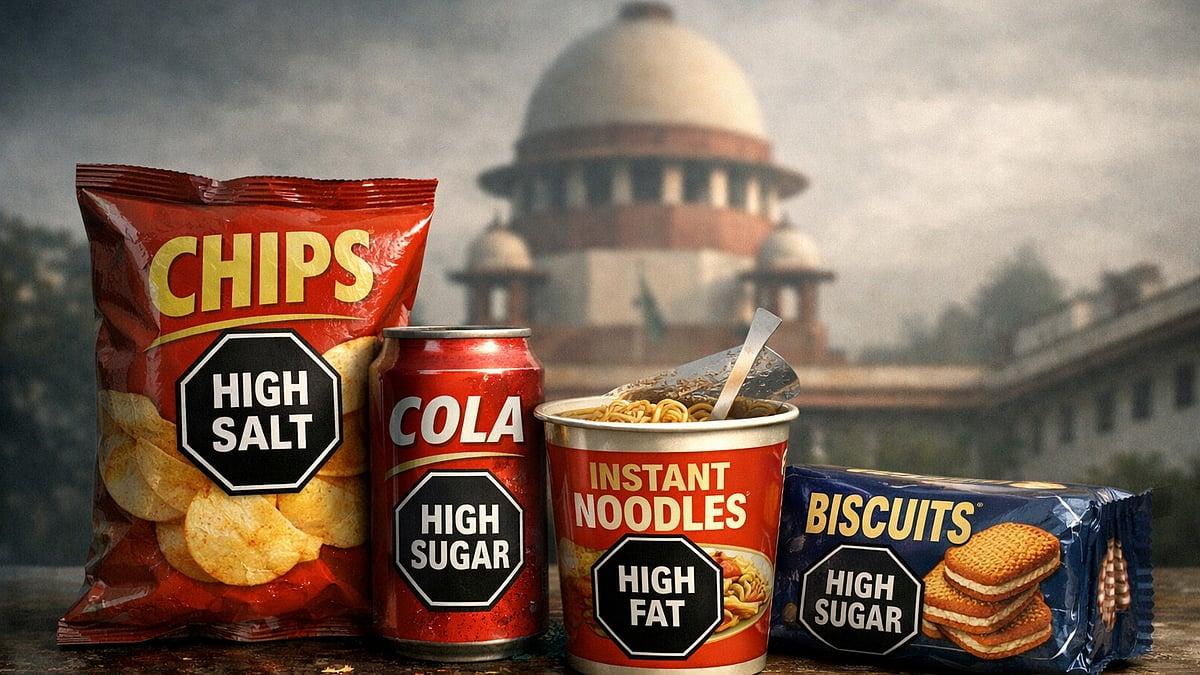
The Food Safety and Standards Authority of India (FSSAI) has proposed introducing red hexagonal warning labels on the front of packaged foods and beverages that contain high levels of sugar, salt or saturated fat. The move aims to give consumers a simple and clearly visible warning about less healthy food choices. FSSAI disclosed the proposal in an affidavit filed before the Supreme Court.
Key Highlights
- Authority: Food Safety and Standards Authority of India (FSSAI)
- Policy: Front-of-Pack Warning Labelling (FOPWL)
- Proposed symbol: Red hexagonal warning
- Major nutrients: Sugar
- salt and saturated fat
- Separate category: Highly sweetened beverages
- Implementation: Proposed in phases
- Objective: Clearer consumer information and better public-health awareness
- Legal context: Supreme Court proceedings
- Current status: Proposed; final implementation timeline not yet announced.
Source: ExamTier Current Affairs
Share your feedback
Have a suggestion about this article? Send it privately to our editorial team.
 Current Affairs
Loading related article
Loading date
Current Affairs
Loading related article
Loading date
Current Affairs
Loading related article
Loading date
Current Affairs